On many building sites an iPad in a protective case is already there: in the site cabin for plans, in the jacket pocket for photos. The question is how far that gets you when it rains, freezes or the device falls from the scaffolding. This article collects what Apple states for the 11-inch iPad (A16) on apple.com and support.apple.com, and puts it next to three tablets from our range. The Apple pages were retrieved on 26 and 27 October 2026. Where Apple makes no statement, we say so. We do not sell the iPad; Apple’s data is the binding reference. The article quotes no prices.
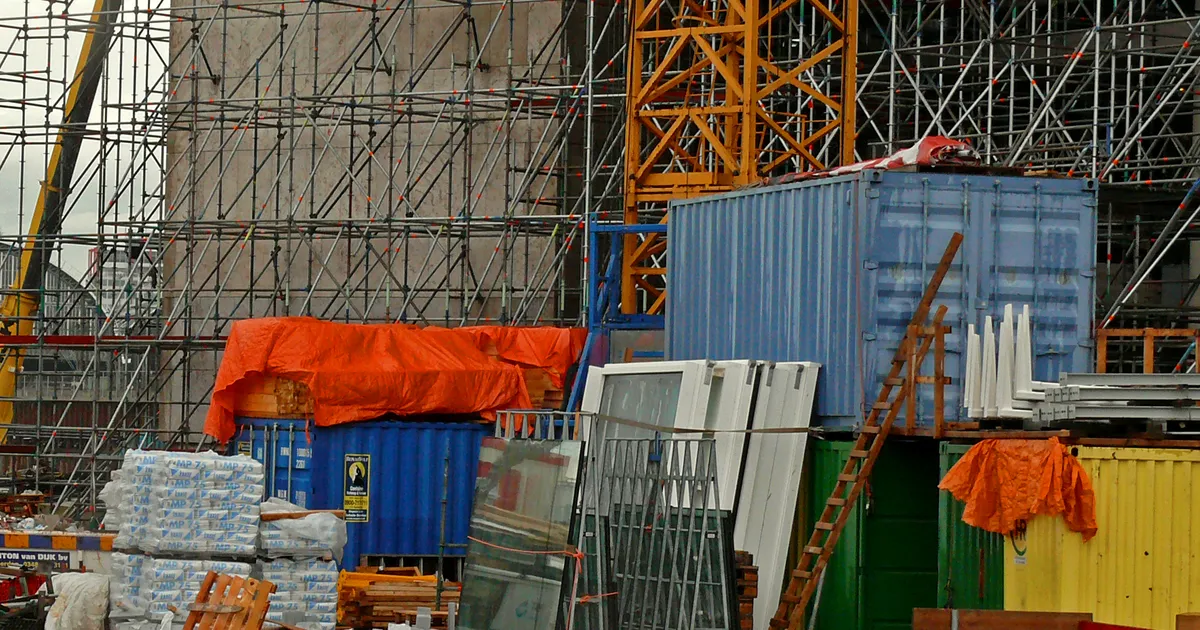
Image: Fons Heijnsbroek, CC0 1.0, via Wikimedia Commons (cropped and resized)
What Apple states on water, dust, temperature and drops
The technical specifications table for the iPad (A16) gives no protection rating, no drop test and no MIL-STD standard. A protection rating and a drop class appear on the same page in the Energy section, as part of the EU energy label and the product information sheet. The operating temperature is given in the technical specifications and on a separate support page.
| Item | Apple for the 11-inch iPad (A16) | Where found |
|---|---|---|
| Display | 10.86 inches diagonal measured as a rectangle, 2360 x 1640 pixels, 500 nits | Technical specifications, apple.com |
| Protection rating | IP42 | Energy label and product information sheet, apple.com |
| Drop resistance | Class E; the scale runs from A (most robust) to E (least robust) | Energy label, apple.com |
| MIL-STD | not stated | not present on the pages we read |
| Operating temperature | 0 °C to 35 °C; storage -20 °C to 45 °C | Technical specifications, apple.com and Apple Support |
| Battery | 28.93 Wh, not replaceable by the user | Technical specifications and product information sheet |
| Weight | 477 g (Wi-Fi), 481 g (Wi-Fi + Cellular) | Technical specifications |
| Updates | at least 5 years of security, bug-fix and feature updates | Product information sheet |
Sources: apple.com/de, technical specifications 11-inch iPad (A16) and Apple Support, if your iPhone or iPad gets too hot or too cold. The 11 and 13-inch iPad Air (M4) give the same values for protection rating, drop class and operating temperature on their page.
On the drop class: classes A to E come from Delegated Regulation (EU) 2023/1669. According to its Annex II, class E for tablets means fewer than 52 drops without defect in the test procedure prescribed there. For the iPad (A16), the product information sheet says “drops without defect: ≥ 0”, for the iPad Air (M4) 51, 42, 39 or 16 depending on the model. This is a different test from the drop test under MIL-STD-810H and cannot be compared with it. Apple thus states the lowest class for the device without a case.
What IP42 means
The first digit 4 stands for protection against solid foreign objects of 1 mm diameter and above, the second digit 2 for protection against falling drops of water when the enclosure is tilted by up to 15 degrees. Only the digit 6 means dust-tight, and water jets begin at the digit 5. Fine dust, as produced when cutting, grinding or drilling, is not covered by the digit 4. Rain driven by wind and water jets, for example from hosing down, are not covered by IP42.
Apple does not state a protection rating against immersion such as IPX7 or IPX8 for the iPad (A16). For the iPad Air it says: “Stated immersion depth in water, for IPx8: not applicable”. Anyone searching for “ipad waterproof” therefore finds IP42 at Apple: protection against drops, not against wind-driven rain, water jets or immersion. Our tablets state IP65 and IP66, which means water jets and powerful water jets. What the digits test individually is explained in the article IP protection classes.
Temperature: 0 to 35 °C
On its support page Apple writes that iPhone and iPad are designed for ambient temperatures between 0 and 35 °C. In cold outside this range, battery life may temporarily become shorter, the device may switch off, and charging may fail. In heat the device protects itself: charging slows or stops, the display dims, and under extreme conditions it may temporarily deactivate. Apple describes this as protective behaviour of the device. It does mean, however, that an iPad on a building site in January frost lies outside the stated range.
Our tablets state -29 °C to 63 °C (Getac ZX10 G2) and -20 °C to 60 °C (Durabook R11, Fieldbook N101G2). How to read the manufacturers’ figures, and why operating and storage temperature are not the same, is covered in the article Operating temperature of rugged devices.
What a protective case changes
Apple’s data applies to the iPad as sold. A protective case does not change it. If a case maker states a drop test or a protection rating, it applies to the combination of case and exactly this iPad model, and it comes from the case maker, not from Apple. We have not tested any case and state no values. Five questions are worth asking before you buy:
- Which iPad model is the case built for, and does the statement apply to exactly this model?
- From what height and by what procedure was the drop tested, and onto what surface?
- Does a protection rating apply only with closed covers, and what do the covers on the USB-C port look like?
- How do touch and pen work under the display cover?
- For what temperature range does the manufacturer state the case?
The iPad next to three tablets from our range
The table shows the Apple row next to three tablets of around 10 inches screen diagonal. The values for our tablets come from the datasheets, which rely on manufacturer datasheets from Getac, Durabook and Fieldbook (Logic Instrument).
| Model | Display | Protection and test standard | Brightness | Operating temperature | Weight | Battery |
|---|---|---|---|---|---|---|
| Apple iPad (A16) (manufacturer data) | 10.86 inches, 2360 x 1640 | IP42; no MIL-STD stated | 500 nits | 0 °C to 35 °C | 477 g | 28.93 Wh, not replaceable |
| Getac ZX10 G2 | 10.1 inches, 1920 x 1200 | IP66, MIL-STD-810H | 1000 nits | -29 °C to 63 °C | 906 g | 3.88 V, 4990 mAh; optional 9980 mAh; LifeSupport technology for battery swaps |
| Durabook R11 | 11.6 inches, 1920 x 1080 | IP66, MIL-STD-810H, MIL-STD-461F | 1000 nits (optional) | -20 °C to 60 °C | 1.2 kg | 11.1 V, 3950 mAh, 8.5 h runtime; optional 6900 mAh, 15 h |
| Fieldbook N101G2 | 10.1 inches, 1200 x 1920 | IP65, MIL-STD-810H | 700 nits | -20 °C to 60 °C | 1.14 kg | 3.8 V, 10000 mAh, tool-free replaceable |
On drop height, the product pages give falls from up to 1.80 m for the ZX10 G2 and from up to 1.2 m for the N101G2. For the R11 our documents give no drop height. Whether the figures apply with or without a case is not stated there. On weight, the iPad at 477 g is the lightest device in the table. Runtimes cannot be set side by side: Apple states up to 10 hours of web browsing or video playback, the R11 states 8.5 hours. The test conditions differ.
Where an iPad is enough and where a rugged tablet is needed
An iPad with a case is enough if the device stays mostly in the site cabin, in the shell construction under a roof or in the vehicle, if viewing plans, signing off records and taking photos are the main work, and if frost and rain are the exception. There is also a reason that has nothing to do with robustness: if your specialist application runs only under iPadOS, it stays an iPad. None of our tablets runs iPadOS.
A rugged tablet becomes necessary when a row of the table applies to your building site. Where water jets are to be expected, IP42 falls short. Anyone working in frost below 0 °C is outside Apple’s range, while our tablets are stated down to -20 °C or -29 °C. In direct sun, 500 nits compare with 700 to 1000 nits. On long shifts it matters that Apple states the battery as not replaceable, while the N101G2 lets you swap it without tools. And for drops, class E with no MIL-STD statement and MIL-STD-810H with a stated drop height stand side by side. How measuring and documentation on the building site work in detail is described in the article Measurement and documentation on the building site. How operation with wet fingers and gloves looks is shown in Touch with wet conditions and gloves.
Anyone considering a retail Android tablet will find two comparisons: Samsung Galaxy Tab Active or rugged tablet and Blackview, Oukitel, Ulefone or industrial tablet. The page Construction industry summarises all devices and requirements for the building trade.
For two uses, none of the devices named fits without prior clarification: work in potentially explosive atmospheres, where an Ex approval is required, and applications tied to iPadOS that must also withstand frost, water jets or drops. In the second case the only option is to assess the case and the iPad as a combination, as described above.
Frequently asked questions
Is an iPad waterproof?
For the iPad (A16), Apple states the protection rating IP42 in the energy label. This protects against falling drops of water, not against wind-driven rain, water jets or immersion. Apple does not state an immersion depth for the iPad (A16).
Does an iPad in a protective case survive a drop on the building site?
That depends on the case. For the iPad (A16), Apple states drop class E, the lowest level of the EU scale. A case can improve the protection; how much is for the case maker to say, and the statement applies to its product in combination with exactly this iPad.
At what temperature may an iPad work on the building site?
For operation, Apple states 0 °C to 35 °C ambient temperature. Outside this range the device may switch off, charging may fail, and in heat the display dims.
Does RobustBook sell iPads or cases?
No. We sell Getac, Durabook, Fieldbook, RuggON and Archos. The iPad appears here only for comparison.
Conclusion: who can stay with the iPad and who cannot
Anyone who uses an iPad for plans, photos and sign-offs in the cabin or under a roof, at temperatures between 0 °C and 35 °C and without rain on the display, gets by with it according to Apple’s data. Anyone who works outdoors in rain, frost or sun, who may drop the device or must swap the battery during operation will find values stated for this in the Getac ZX10 G2, the Durabook R11 and the Fieldbook N101G2. Between the two lies the question of the operating system: Android or Windows instead of iPadOS.
The RobustBook team helps with the selection and names the configuration that suits your building site.